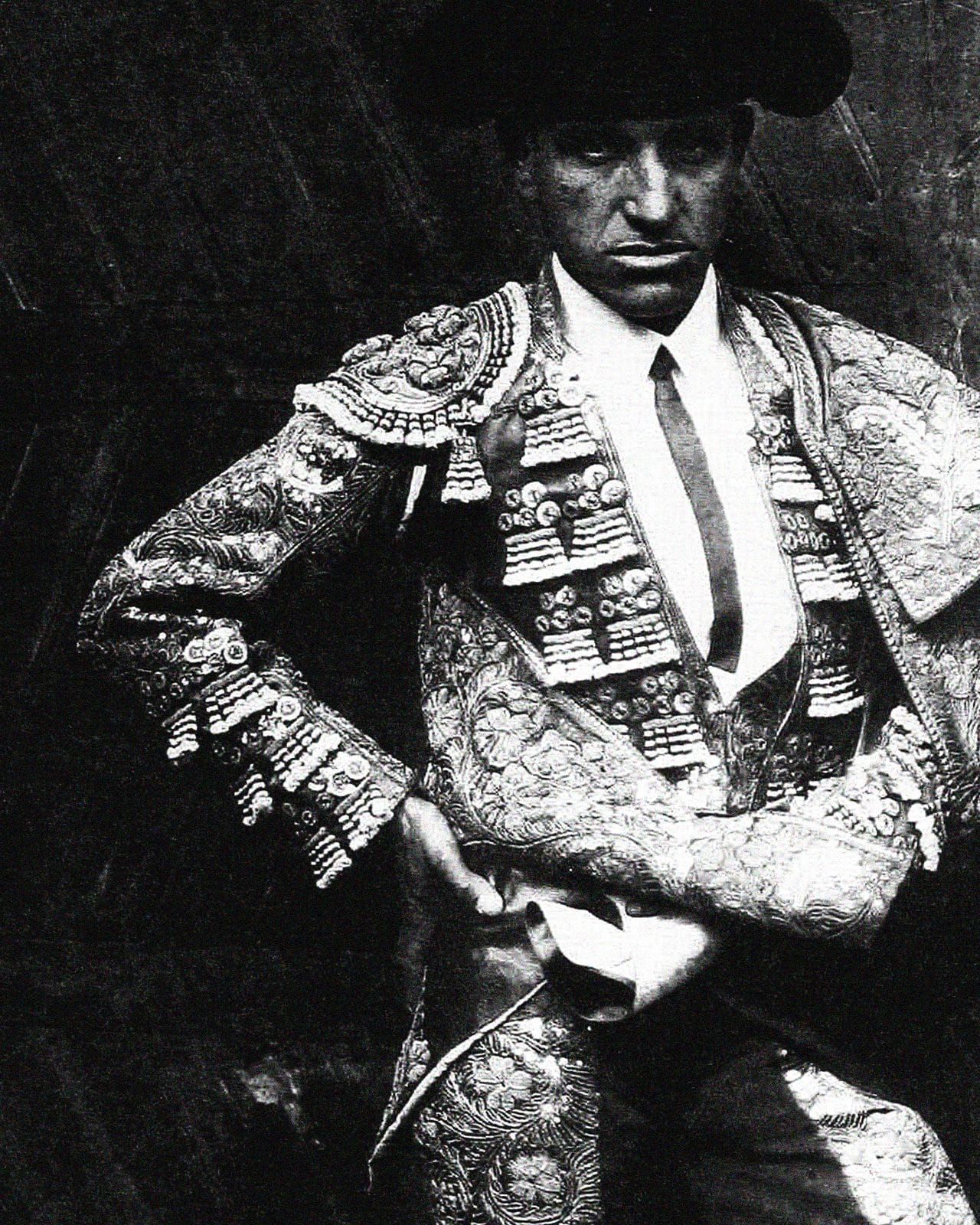
There are essays that do not seek to add arguments, but to restore an evident truth that, through wear or fear, has ceased to be visible. Javier García Gibert's belongs to that lineage. It does not come to defend bullfighting —an enterprise, moreover, ever more futile—, but to place it where defence is no longer the problem.
Because what is at stake is not a practice, but a form of consciousness.
From its first pages, the book settles into a fertile discomfort: the distance between what we call sensibility and what is no more than its sentimental caricature. It is no minor distinction. In it is encoded much of the contemporary misunderstanding. To weep for the bull —without knowing what a brave bull is— is not a sign of moral refinement, but of symbolic illiteracy. And perhaps something worse: of an incapacity to sustain the complexity of the real.
The error, however, lies not only with the one who denies, but also with the one who defends badly. For too long, bullfighting has been explained from an exhausted repertoire of names and arguments, as if it were enough to invoke a tradition to justify it. García Gibert's merit consists in opening that field, in shifting the conversation towards a wider constellation: humanistic, Hispanic, even minority.
Because yes, bullfighting is today a minority. And perhaps therein lies its truth.
Against the democratic illusion that everything must be standardisable, the book introduces an uncomfortable idea: there are cultural forms that are sustained not by majority, but by intensity. Forms that ask not for permission, but for understanding. To defend them is not a reactionary gesture, but a form of resistance against a homogenisation that is not neutral, but profoundly directed. So-called "cultural imperialism" acts not only by imposing contents, but by deactivating sensibilities.
And in that process, the first thing lost is the capacity to read symbols.
Here the essay reaches one of its most fertile cores: bullfighting as a symbolic system of an almost inexhaustible richness. Everything in it —the bull, the bullfighter, the ring, the time of the faena— demands interpretation. Not in an academic sense, but in the highest: as that which compels us to think beyond the obvious.
The bull is not just any animal. It is a form of energy that cannot simply be reduced to an "animality" standardisable within the prevailing discourse. The bullfighter is not a performer, but someone who measures himself against that energy on the plane of the gesture. And the spectator is not a consumer, but an active part of a scene where what is decided is not only success or failure, but the very meaning of what occurs there.
That is why García Gibert's insistence on the golden-age tradition is so revealing. Not as nostalgia, but as a key. Bullfighting is not a folkloric accident, but a consequence. A form that emerges from a particular conception of the world, where man does not think himself outside conflict, but within it.
At that point, the reading the book suggests —though it does not always make it explicit— connects with a greater intuition: that of man as a being who needs to give himself form before that which overflows him. Hence the relevance of bringing Miguel de Unamuno and his reading of Don Quixote onto the stage: not as parody, but as intimate drama. The bullfighter, in that sense, does not act; he exposes himself. And in that exposure something is at stake that cannot be delegated.
There is, moreover, a particularly suggestive vein in the book: the recovery of that subtle, almost ungraspable dimension that afición has so often tried to name —with uneven success. Call it spell, chance, grace. García Gibert avoids the commonplace of duende, perhaps because he knows that the word, from so much use, has ceased to say what it meant to say. He prefers to circle the phenomenon, to hint at it, to let it act.
It is there that the essay becomes truly valuable: when it does not explain, but places the reader in a disposition to perceive.
Because that is, at bottom, the criterion of every great essay. Not to demonstrate, but to sharpen the gaze. Not to impose a reading, but to make an experience possible. In that sense, the book is exemplary: it shuns hermeneutic pedantry without falling into simplification, and maintains a rare generosity towards the reader.
There remains, however, the decisive problem.
What to do with a form that the present perceives as anachronistic?
García Gibert does not dodge the word. He assumes it. But he inverts it. Anachronism —that "blessed anachronism"— is here not a defect, but an index. It points to that which has not been wholly absorbed by the dominant logic. That which, by remaining out of time, still preserves a power.
Perhaps that is why bullfighting is so unsettling.
Not because it is incomprehensible, but because it demands too much. It demands memory —not as archive, but as living experience. It demands accepting the paradox: that in a single space the fiesta and the tragedy coexist, play and death, the ephemeral and the eternal. It demands, in short, a form of attention that the present has ceased to cultivate.
And that is where the book is wholly right.
Not for defending bullfighting, but for reminding us that, by losing it without having understood it, it is not only a spectacle that disappears. A form of relation with the world disappears. And that loss —unlike others— is irreplaceable.
Javier García Gibert, A la luz del toreo. Tradición hispánica y humanística en la tauromaquia. Editorial Biblioteca Nueva, Madrid, 2018.