There is a silent demand that runs through our age: that everything be good for something. Everything must justify itself. Everything must produce. Everything must have a function, a yield, a measurable result. Even what traditionally escaped that logic —art, thought, contemplation— is today pushed to explain itself in terms of usefulness.
What is it good for?
The question seems innocent. It is not. Applied to art, it is a form of cancellation. Because art —when it truly is art— is good for nothing.
It does not improve production. It does not optimise processes. It does not generate direct profit. It does not solve problems in the way technology or science solve them. Art is not made for that. And when it is required to be, it ceases to be art and becomes something else: entertainment, propaganda, cultural product.
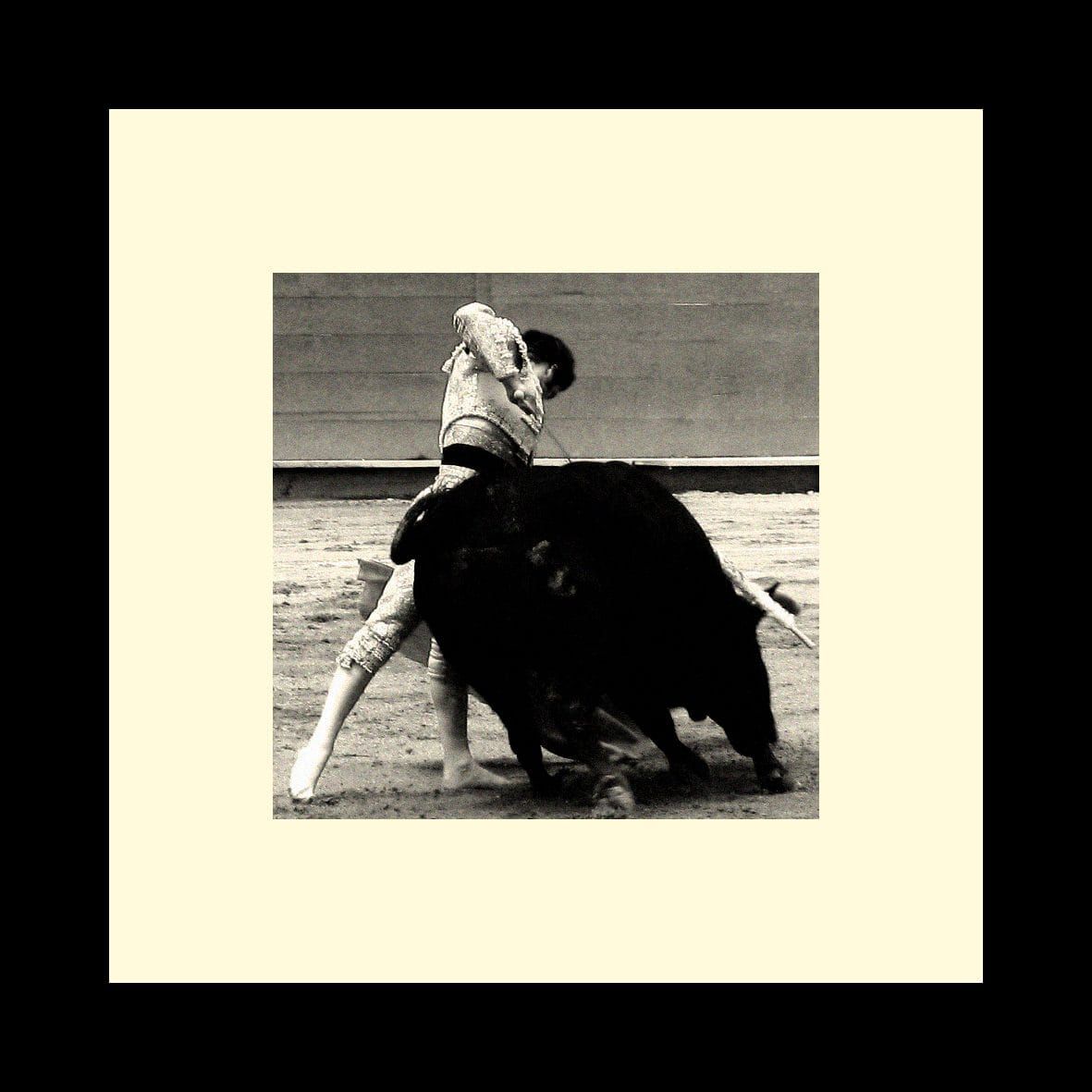
Bullfighting, in this respect, is especially uncomfortable. Not only because it involves an evident conflict —the confrontation with the animal, the presence of death— but because it does not let itself be easily integrated into the logic of usefulness. It produces nothing that can be reused. It leaves no object. It generates no transferable value. What happens in the ring is consumed in the very instant it occurs.
It is an expenditure. An expenditure of time, of energy, of life. And precisely for that reason it makes sense.
In a culture that measures value in terms of yield, expenditure appears as an anomaly. As something to be justified or eliminated. But there are experiences that exist only in that form: as loss. As squandering. As something that is not recovered.
Bullfighting is one of them.
The bullfighter does not enter the ring to produce a result. There is no external objective to be met. There is no "what for" that can be formulated without betraying what occurs. There is, yes, a form that is sought, a relation that is attempted, a risk that is assumed. But none of that can be translated into terms of usefulness without losing its meaning.
That is why bullfighting resists. It resists not only its detractors, but also its defenders when they try to justify it in terms that do not belong to it: tradition, identity, economy, culture. All of that may be true, but it is secondary. Accidental.
The essential is something else.
That there, in the circle of sand, an experience is put into play that is good for nothing and yet matters. It matters because it suspends, for an instant, the dominant logic. Because it introduces a form of time that does not accumulate. Because it forces the spectator to stand in a place where no benefit is possible. Where the only thing one can do is look.
And sustain what one sees. Which is no small thing.
In a world saturated with images, looking has become extremely difficult. Not for lack of stimuli, but from excess. Everything is shown, everything is repeated, everything is archived. The gaze slides without settling on anything.
Bullfighting, by contrast, demands something else.
It demands an attention without guarantee. An availability that does not know in advance what it will receive. The spectator does not consume a closed form; he exposes himself to an open process. To something that may fail. To something that may not happen.
And yet, there it is.
For a few minutes, everything else is suspended. There is no productivity, no usefulness, no result. There is a body, an animal, a space and a time that does not let itself be fully measured.
That is art. Not an object, but a situation. Not a product, but an experience. Not something that serves, but something that happens.
That is why it unsettles. Because it cannot be justified without being deformed. Because it cannot be translated into the dominant language without losing what defines it. Because, at bottom, it recalls something we would prefer to forget: that not everything in life has to be good for something.
That there are things —few, but decisive— that have meaning only insofar as they have none. And that, perhaps, is where their value lies.